The Warm-Up Car Park: A Beginner’s Guide to Sharing a Lift to a UK Trailhead
A buddy ride often begins in a car park, not on a bridleway. Someone is reversing towards a hedge, someone else is trying to remember whether their front wheel goes left or right, and a third person is asking whether the café actually opens before ten. The car journey to the trailhead can be the awkward prelude to a good day out—or it can be the warm-up. The difference is usually a bit of planning and a lot less guessing.
At Bicycle Buddy, we’re all for routes and riding mates, but the social logistics matter too. If you’re new to lift-sharing with bikes, here’s a friendly UK guide to making the car part feel like part of the ride.
The car is the first social segment
Think of the drive as the first segment of the day. It sets the tone. If everyone turns up at the same village hall car park at the same time with the right kit and a rough plan for getting home, the ride starts relaxed. If nobody knows who’s bringing the rack, it starts with five people staring at a boot.
Before the day, get the basics into one group chat: who’s driving, how many bikes the car can take, where you’re meeting, what time you’re aiming to roll, and roughly when you expect to be back. Keep it simple. A short message like “I can take two bikes plus two people, meet at the National Trust car park at 9, back by 3ish” does more than twenty messages of maybes.
It also helps to name a backup plan. If the driver has a last-minute problem, who else can carry a bike? If the weather turns, who makes the call? Beginner buddy rides work best when nobody has to improvise a rescue at 8.55am.
Rack rules before playlist rules
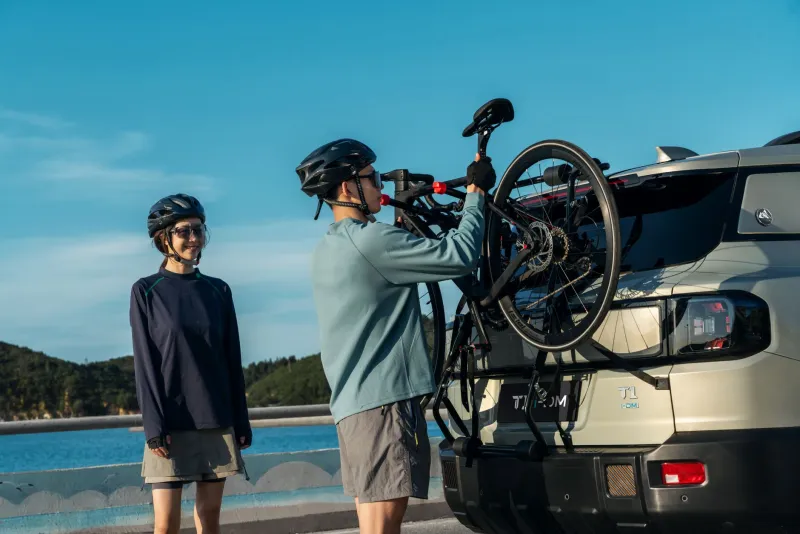
Bike racks are brilliant, but they’re not magic. The driver owns the rack rules because the driver owns the car and the responsibility. Before anyone lifts a bike, check the rack’s weight limit and that it fits the bikes going on it. A towbar rack, a roof rack and a strap-on boot rack all behave differently, and “it’ll probably be fine” is not a fixing method.
A few beginner-friendly habits go a long way. Take off loose bottles, lights and bags that could fly. Protect frame contact points if you can. Make sure the bikes are strapped at the wheels and frame as the rack intends, not just at one point. Check that lights and the number plate are still visible, because UK roads and car parks aren’t always forgiving on that front. And if you’re not sure how someone else’s rack works, ask before you start clipping things on.
One more thing: don’t be the person who turns up with a bike that needs a full strip-down to fit. If you’ve got mudguards, a child seat, or a particularly long wheelbase, mention it beforehand. It’s much easier to plan around than to discover in a car park with a queue behind you.
Petrol money without the dance
Money can be the quiet awkward bit of lift-sharing. Someone has driven, insured the car, filled the tank and paid for parking. Everyone else has had a nice nap. That’s fine—but it’s better to agree the shape of the cost early.
The simplest approach is for the driver to suggest a fair contribution before the day, whether that’s a set amount or a rough split. Passengers can send it by bank transfer before or after the ride, or hand over cash if that’s easier. Parking charges should be split the same way, especially at popular trailheads where a full day can cost more than a round of teas. If you use a parking app, one person can pay and everyone else can chip in.
What you’re avoiding is the vague “I’ll get you a coffee” situation. A coffee is lovely. It is not a full tank. Be clear, be quick, and don’t make the driver chase anyone. It’s a small thing, but it keeps the buddy part of buddy rides healthy.
The meeting time is a promise, not a vibe
A 9am meet usually means ready to ride at 9, not arriving at 9 and then hunting for a pump. If the plan says 9, aim to be there at 8.50 with your bike out and your shoes on. If you’re running late, say so early. A quick “stuck behind a tractor, ten minutes” is much better than silence while everyone stands around pretending not to check their phones.
Agree the exact meeting point too. “The car park” is fine until there are three car parks and one is a pub. Use a postcode, a what3words location, or a clear landmark like the village hall or the station car park entrance. If the driver is collecting people, set one pickup point and stick to it. And if you’re the passenger, be ready when the car pulls up—don’t leave the driver circling a residential street like a taxi on a bad night.
When plans change, say the plan out loud
Things happen. A bike won’t fit. A rider wakes up ill. The forecast turns from “a bit damp” to “why is the sky doing that?” The mark of a good lift-share isn’t sticking rigidly to the original idea; it’s changing the plan clearly.
If you need to cancel, tell the driver as soon as you know, not at the meeting time. If the rack situation isn’t working, don’t force a third bike onto a two-bike rack. If the weather looks grim, decide by a set time—say, 7am—so nobody gets up and drives for an hour on a maybe. And if someone has a mechanical before the ride even starts, be the mate who helps instead of the mate who sighs loudly.
A changed plan is fine. A silent plan is not. Keep the group chat honest and the day stays friendly.
The homeward leg counts too
Before you leave the trailhead in the morning, agree the return plan. Where are you finishing? What time roughly? Who needs to be back for a train, a dog, or a Sunday roast? Keep your phone charged enough to send a message if the ride splits or someone gets delayed.
No-drop applies to the car park as well. Don’t leave the driver waiting for forty minutes while you have a second slice of cake, and don’t vanish without saying where you’re going. If plans shift on the way home, message. It’s a small courtesy that keeps the whole day feeling like a buddy ride rather than a one-way lift service.
A tiny pre-ride lift checklist
Before the day, confirm the car, the rack, the bike count, the meeting point and the rough return time. On the morning, check your bike is clean enough not to trash someone’s boot, your kit is packed, your phone is charged and your contribution is sorted. At the car park, help load, help check straps, and help everyone roll out together.
None of this is complicated. It’s just the sort of quiet organising that lets the ride be the main event. Sort the lift, and the trailhead starts feeling a lot closer to the good bit.