Shoulder to Shoulder, Ready to Drop In: A Buddy Guide to Two-Abreast Lane Craft
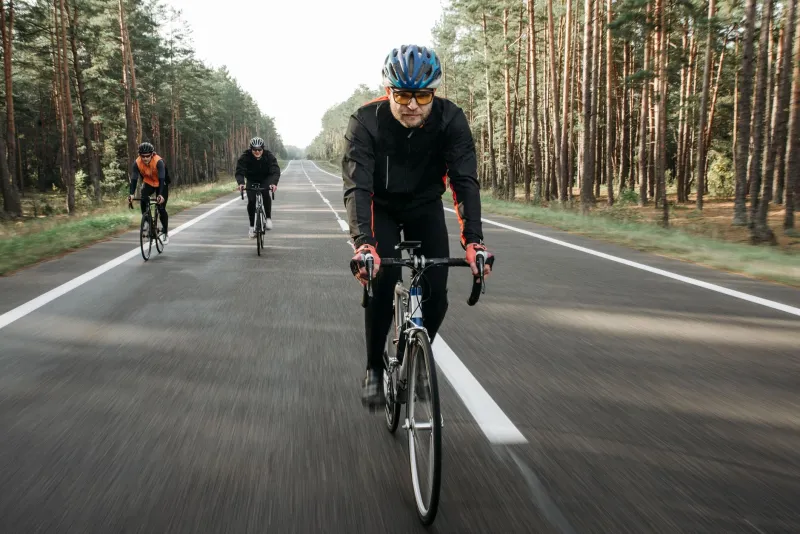
There is a lovely moment on a quiet lane when two buddies settle shoulder to shoulder, the chat finds its rhythm and the miles seem to click past. That is the promise of riding two abreast. It is also the moment to remember that the lane is shared, the sightline can change and the car behind you might be closer than your conversation suggests.
This is not about being bossy or pretending to be a road captain. It is about having a simple shared habit: ride side by side when it helps, drop into single file when the road asks you to, and use a few clear words so nobody has to guess.
Why two abreast is worth learning
For a pair of buddies, riding two abreast can be genuinely useful. You can talk without shouting over a shoulder, you can point out potholes and gravel more easily, and you can keep an eye on each other. It can also make you a more visible shape to drivers approaching from behind, rather than a thin line that blends into the hedge.
In the UK, riding two abreast is allowed, but the Highway Code also asks riders to go single file on narrow or busy roads, around blind bends and when passing horses. That is the practical heart of it: two abreast is a tool, not a permanent state. The trick is to treat it like a conversation lane that you open and close as the road changes.
The default, the drop-out and the rejoin
On a quiet, straight lane with good sightlines, two abreast is often the natural default. You are easy to see, the road is wide enough and there is no reason to shrink into a line. But the moment the lane narrows, the hedge crowds in or a crest hides what is coming, the pair should be ready to drop out.
Agree before you set off that either rider can call the change. The rider at the back often has the best view of traffic approaching from behind, while the rider at the front can see the bend, bridge or parked car first. Nobody should feel told off. A simple call of 'single file' is a shared safety move, not a criticism of your chat.
When the road opens up again, the front rider can call 'clear' or 'two up' once it is genuinely safe. Rejoining two abreast should be just as deliberate as dropping in. Do not drift out because the conversation got interesting. Check, call, then move.
Reading the road as a pair
Blind bends are the classic case for tucking in early. If you wait until you are already on the bend, you are asking a driver to make a judgement with very little time. The front rider should call 'bend' and move left before the corner, and the rear rider should follow the line rather than trying to stay alongside.
Narrow bridges deserve the same respect. Go single file before the bridge, not halfway across it. The same goes for cattle grids, pinch points and places where the hedge has been cut back to reveal a surprisingly tight gap. A quick 'bridge' or 'narrow' call gives your buddy time to react.
Busy B-roads are a different mood. Some pairs ride single file on them almost all the time, even on straights, because the speed and volume of traffic make side-by-side chat feel like a luxury. Others will ride two abreast on a clear straight and drop in as soon as a car appears. Both can work if you are honest about the road and quick to react. The important thing is not to defend your position out of habit.
Horses need their own mention. Slow down, go single file, avoid sudden noise and give plenty of room. A cheery 'horse' call from the front rider lets the rear rider know to tuck in and stay quiet. If the rider asks you to wait, wait. It is their animal and their call.
A small vocabulary goes a long way
You do not need a cycling club briefing to ride together safely. A handful of calls will do: 'car back' for traffic behind, 'car up' for traffic ahead, 'single file', 'two up', 'clear', 'bend', 'bridge', 'gravel', 'horse' and 'stopping'. Use them early and often. A call that arrives two seconds before the hazard is just a surprise.
Hand signals help too. A left arm down or a point to the left can reinforce a single-file move when the wind is loud or your buddy is mid-sentence. And if you are the rider behind, repeat the call if your buddy might not have heard it. A relayed message is not nagging; it is teamwork.
Keep the chat, lose the scramble
One of the nicest things about a buddy ride is that the conversation does not have to stop just because the road gets busy. It can pause. There is no rule that says every thought must be finished before you tuck in. A simple understanding helps: when someone calls 'single file', the chat goes on hold, the pair sorts out the road, and then the story resumes at the next quiet stretch.
That is why it is worth practising on a calm lane before you tackle a busier route. Ride two abreast, have the front rider call 'single file', both merge left in order, then have the rear rider call 'clear' when it is safe to return two up. Do it a few times and it stops feeling like a manoeuvre. It becomes a habit, like checking behind before you pull out.
The buddy pact
Two abreast is at its best when it feels relaxed and deliberate. The pair is visible, the chat is easy and the road is being read by two sets of eyes. Single file is at its best when it happens early, smoothly and without anyone taking it personally.
So make a little pact before your next ride: we will ride side by side when it helps, we will drop in when the road asks, and we will call it clearly. Then you can get back to the important business of putting the cycling world to rights — one quiet lane at a time.