Spray, Stay, Say: Mudguard Manners for Riding Wet UK Lanes Together

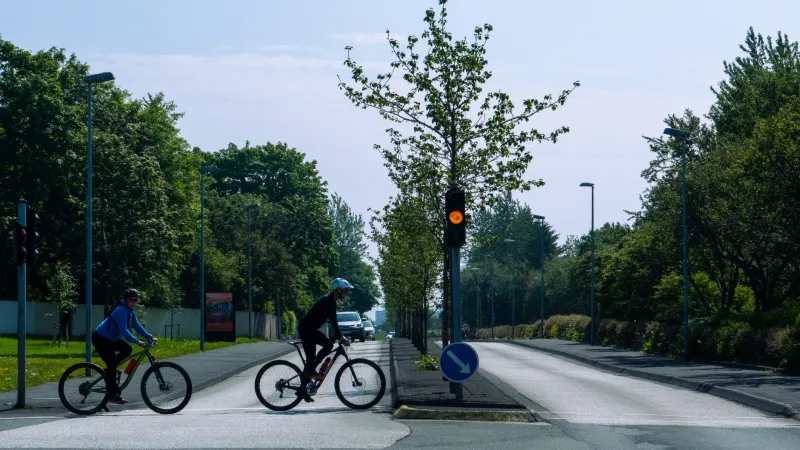
Photo by Photo by Nik Demidko on Unsplash on Unsplash
There's a particular sort of silence that falls over a buddy ride about four miles in, when you glance across and realise your mate's entire face is speckled with grit and ditch water. Nobody says anything. Everybody knows. The ride carries on, but something small has curdled.
Wet lanes are brilliant, genuinely. Quiet roads, that smell of damp hedgerow, the smug feeling of being out when everyone else has stayed in. But they come with a code, and the code isn't about being precious. It's about not being the person who turns a nice morning into a laundry emergency.
Mudguards: the least glamorous upgrade you'll ever love
Let's get the boring bit out of the way early, because it does more work than any amount of skilful positioning. If you're riding with someone on wet tarmac, mudguards on the rear wheel are not a fashion statement. They are the single biggest favour you can do your riding partner.
You don't need the full touring setup with a leather flap and a brass bell. A clip-on rear guard that takes thirty seconds to fit will stop the worst of the rooster tail, and a small mudflap — even a homemade one cut from a plastic bottle, which is a time-honoured British tradition — does the rest. The flap matters more than people think. Without one, the spray arcs up and out and lands squarely on the face of whoever's sitting behind you.
Front guards are a bonus rather than a duty. They keep your own shins and bottom bracket cleaner, which is nice, but they don't protect your mate. Prioritise the back.
The honest truth: if you turn up to a wet-weather buddy ride with a bare rear wheel, say so. "No guards, so I'll sit at the back" is a perfectly decent sentence and everyone relaxes.
Where you sit, and why it isn't rude to drop back
Beginner riders often assume the polite thing is to ride close and chat. On a dry summer lane, fair enough. On a wet one, close is a spray zone.
Give the rider in front a good few bike lengths rather than half a wheel. You'll still hear each other on a quiet lane, and you'll have far more time to react if they brake for a pothole or a startled pheasant. If you're the one in front, glance back now and then — not to check they're keeping up, but to check you're not hosing them down. Adjusting your line slightly, or easing off through a deep puddle, is the wet-weather equivalent of holding a door open.
A useful habit: ride slightly offset rather than dead in line. Sitting a touch to one side puts you out of the direct slipstream of grit. Swap sides occasionally if the lane allows, and don't be shy about agreeing it before you set off.
The puddle question
Puddles on UK lanes are never just water. They are water plus a pothole of unknown depth, a drain cover, a lost wing mirror, or a patch of mud that's basically grease. So the rule is simple: nobody goes through a puddle blind at speed.
If you're leading, call it. "Puddle — middle of the lane" gives your mate a second to choose a line. If it looks deep or the bottom's unclear, slow down and let them see your line rather than watching you disappear into a bow wave.
If you're following, don't assume the line ahead is safe just because someone else took it. Riders on wider tyres and heavier bikes will float through things a skinny-tyred road bike will slither about in. Take your own look.
And the small stuff: don't ride through a puddle beside a pedestrian or a horse. It's the sort of thing that seems funny for about half a second and then isn't. Slow, wide, quiet.
A shout-out code that takes ten minutes to learn
You don't need a full club lexicon. Four or five words cover almost everything on a wet lane, and they're all things you can say without taking a hand off the bars.
- "Puddle" — obstacle ahead, pick your line.
- "Gravel" or "mud" — surface warning, ease off the pedals through it.
- "Car up" / "car back" — traffic approaching from the front or behind.
- "Stopping" — for gates, junctions or anything that needs a proper look.
- "Gap" — the rider behind has dropped off; time to ease up.
Say them loud and early. A call that arrives one second before the hazard is basically just a noise. And if you're the one following, pass it back if there's a third rider — the call chain is what keeps a small group tidy.
Coming home filthy, and why that's fine
Here's the thing that gets lost: wet rides are supposed to be a bit mucky. If you finish spotless, you probably weren't paying attention to the road. The goal isn't staying dry. It's staying courteous.
So build in a little ritual at the end. A quick wipe of the chain, a check that nobody's brakes are full of grit, and a shared debrief over a flask or a café stop if you can face it. Damp, slightly grubby and grinning is the correct outcome.
And if you're the one who forgot the mudguard — again — buy the tea. That's the pact.