Short Days, Long Chat: Building a Winter Buddy Route That Still Feels Like an Adventure
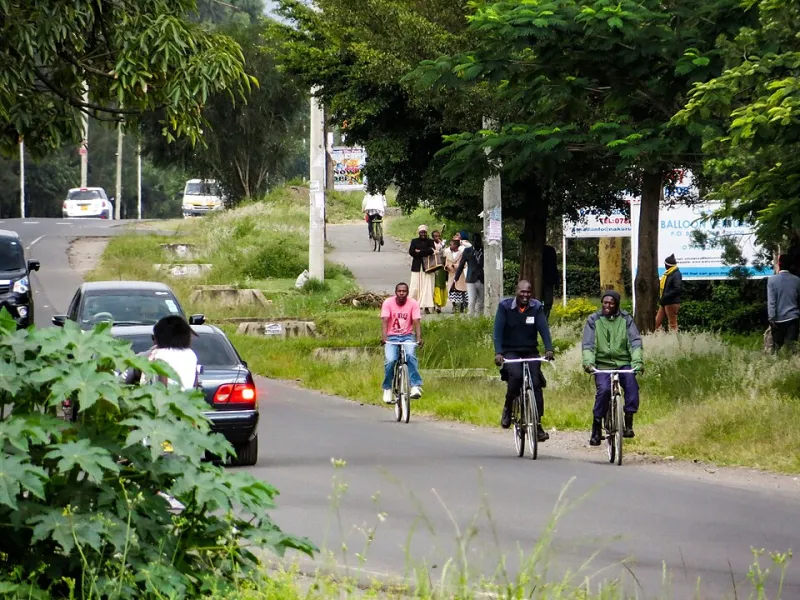
Photo: Victor Kibiwott, CC BY-SA 4.0, via Wikimedia Commons
The first Sunday after the clocks go back is always a shock. You meet at nine, you're home by half two, and the sun has already packed up and gone indoors. By the end of the month it's murky at half four and properly dark by five — roughly the moment a lot of riders quietly decide the bike goes in the shed until March.
It doesn't have to. Winter riding is a skill like any other, no different from cornering or fixing a puncture, and the good news is that it's mostly about planning rather than fitness. If you're trying a buddy ride in the dark months, here's how to build a route that ends with a warm mug in your hand rather than a head-down slog along a dual carriageway.
Start with the sunset, not the distance
Most people plan a winter ride by picking a distance and hoping. Try it the other way round. Look up sunset for the week you're riding — in mid-November most of the UK is dark by about 16:15, and by mid-December it's nearer 15:45 — then work backwards. Aim to be back at your finish point a clear 30 to 40 minutes before sunset, so you're never riding the last stretch with a flat battery and a hopeful attitude.
That single rule will cut most beginner winter rides down to somewhere between 15 and 25 miles, which is absolutely fine. Nobody is handing out medals for a 50-miler in the freezing fog.
Build in an off-ramp halfway
A figure-of-eight route is the winter planner's best friend. You ride one loop, come back through your start point, then head out on a second. If the weather turns, or one of you is having a rough day, or a light starts flickering in a worrying way, you can call it after loop one and nobody has to abandon anyone in the middle of nowhere.
If you can, pick a meeting point near a railway station. A train home is the ultimate no-drama exit plan, and it makes the whole thing feel less like a commitment. Check the timetable first, mind — Sunday services in winter can be a work of fiction.
Roads that behave after dark
Unlit country lanes are wonderful in July and a completely different proposition in December. There's no ambient light at all, your beam is the only thing picking out the tarmac, and the surface tends to be wearing a thin coat of tractor mud, wet leaves and standing water with a pothole hiding underneath it. Ride a little further out from the hedges than you would normally, and let the rider in front call the hazards rather than guessing.
Traffic-free shared paths, towpaths and the calmer stretches of the National Cycle Network are lovely in the dark — but they come with their own etiquette. Dog walkers are often invisible until the last second, gates appear out of nowhere, and many sections expect cyclists to give way. Slow down, use a bell, and save the fast stuff for daylight.
And the big one: busy commuter roads between about 16:30 and 18:30 are a completely different animal in winter. If you can ride them at a different time — a Saturday morning, a Sunday — the same road can feel twice as wide and half as stressful. If you can't, choose a route that avoids the worst of it rather than one that's technically shorter.
Meeting points that work when it's black
A good winter meeting point is somewhere you'd be happy standing on your own for ten minutes. Station forecourts, supermarket car parks, leisure centres and pub car parks all fit the bill: bright, usually covered by CCTV, often with a loo and a coffee nearby. Remote laybys, unlit canal bridges and anything behind a gate that shuts at dusk do not.
Lighting without a spending spiral
The legal minimum in the UK is a white light at the front, a red light and a red reflector at the back, plus pedal reflectors on bikes built after 1985. Flashing lights are allowed, but a steady front light makes it far easier for drivers to judge how fast you're closing — and it's kinder on your riding partner's eyes.
For unlit lanes, something in the 200 to 400 lumen range up front is plenty. Around town, a modest 50-lumen blinker will do. At the back, 20 to 50 lumens is the sweet spot, and the genuinely useful beginner upgrade is running two rear lights — one on the seatpost, one clipped to a bag or jacket — because a single failed battery shouldn't make you invisible.
Budget lights from the big outdoor shops and supermarket cycling specials are absolutely fine to start with. Charge everything the night before and bring a small power bank. A dead light two miles from home is the most avoidable problem in cycling.
Layers: the forty-quid version
You don't need the expensive jacket. Start slightly cold — you'll warm up in ten minutes and spend the rest of the ride comfortable rather than damp. A base layer, a jersey or thin fleece, and a light waterproof shell will handle almost everything a British winter throws at you. Gloves and a buff make a disproportionate difference for the money, and a dry pair of gloves in a sandwich bag is the best two-quid insurance you'll ever buy.
Agree the pace and the exit before you set off
This is the bit people skip, and it's the bit that turns a nice ride into a stressful one. Be honest about your pace. Agree out loud that you ride to the slowest rider and regroup at every junction. Agree a time to turn for home rather than a distance — 'if we're not at the cafe by three, we head back' is a much easier promise to keep than 'we'll do forty miles'. And give each other explicit permission to call it off, no explanation needed.
The pre-ride check to run through together
- Lights on, charged, and pointed sensibly — not into your mate's eyes
- Spare rear blinker in a pocket or bag
- Phone charged, route downloaded, live location shared with someone at home
- Layer count agreed, plus dry gloves
- A tenner and a card, because cafe card machines fail in the cold
- Both of you know the bail-out points and the last train time
- Water and something to eat, even on a short one
Run that list out loud together at the meeting point. It takes ninety seconds and it makes a new riding buddy feel looked after rather than tested.
Winter miles, in company
The dark months aren't an endurance test to be survived — they're a different flavour of riding, and honestly a sociable one. You talk more when you're not chasing a Strava segment. You notice the pub you'd normally fly past. You learn that a Tuesday night loop with one mate and two good lights can be the best part of the week.
Get the planning right, and the short days stop being a reason to stay in. They just become the reason you leave a bit earlier and finish with a pot of tea.