Hole, Gravel, Car Up: A Friendly Phrasebook for Your First Group Ride

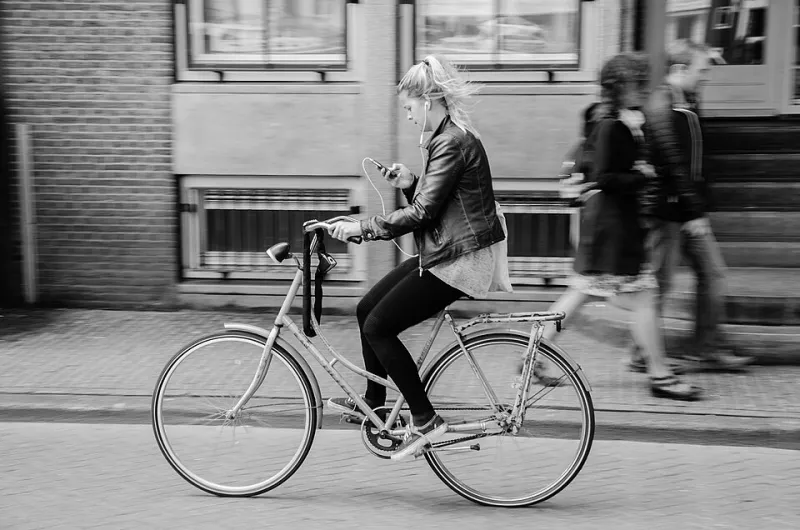
Photo: Change UK, Public domain, via Wikimedia Commons
There's a moment on every first group ride where someone shouts a single word, everyone else moves in unison, and you have absolutely no idea what just happened. It's not you. It's a dialect — a set of calls, signals and small courtesies that riders pick up over a season or two and then forget they ever had to learn.
Think of it as a phrasebook rather than an exam. Nobody is marking you. The only thing anyone actually cares about is that you're predictable and that you say something when you see something.
It's a dialect, not a test
The whole system exists for one reason: the person behind you can't see what the person in front can. Calls pass back down the line like Chinese whispers, and signals get repeated even when the road is obviously clear, because the rider three back might not have the same view you do. If you repeat a call you heard, you're already doing it right.
The three calls you'll hear most
Hole — there's a pothole, drain or other wheel-swallowing hazard. Point at it as well as shouting, and make sure you point at the hole, not vaguely in its direction.
Gravel or loose — the surface is about to get interesting. Slow down gently rather than grabbing a handful of brake, and don't swerve.
Car up and car back — a vehicle approaching from the front, or coming up behind. If you hear 'car up', the group will usually single out or tuck in; if you hear 'car back', hold your line so the driver can see a tidy, predictable group rather than a wobbling argument.
Other regulars you'll meet: slowing, stopping, clear at junctions (only when it genuinely is), and on the left when passing a pedestrian or horse on a shared path. On towpaths and traffic-free routes, a bell and a cheery 'morning' does more for cycling's reputation than any amount of shouting.
Hand signals: pointing, palms and the elbow flick
Most signals are just the shout with an arm attached. Point down at the obstacle with the hand on that side. Left arm out for a left turn, right arm out for a right turn. A palm held low behind you means slowing; a raised palm means stopping.
The odd one out is the elbow flick — a sharp twitch of the elbow, usually on the right, meaning 'come through'. It's how the rider in front tells you to overtake when they're happy for you to pass, and it's much easier than trying to wave while holding a line.
'Single out' and 'easy' — the two most useful group phrases
Single out means the pair of you riding side by side should drop into a line, usually because a car is coming or the lane has narrowed. It's not a criticism, it's just traffic.
Easy means the pace is going up and someone would like it to come back down — perhaps they're on a hill, perhaps they've blown a gasket, perhaps they just want a chat. Nobody takes offence. Saying it early is far better than quietly getting dropped and going home miserable.
Half-wheeling and other accidental crimes
The classic beginner error is half-wheeling: drifting half a wheel ahead of your partner so that you're constantly, invisibly racing them. It feels like keeping pace; it actually means they have to speed up to stay level, and it turns a nice ride into a slow-motion duel. If you notice you're a few inches ahead, ease off and match their front wheel rather than trying to win.
Second is overlapping wheels — riding so your front wheel sits beside their rear one. Fine at a steady pace in a straight line, genuinely dangerous if anyone has to move sideways suddenly. If you're new, sit directly behind or directly alongside, with daylight between the tyres.
And the third: going off the front. On a no-drop buddy ride, the group is only as fast as its slowest rider. Blasting up the hill and waiting at the top isn't heroic — it's the reason newer riders stop coming. Regroup at junctions and the top of climbs, and turn round to check you can still see everyone.
Peeling off and the cafe stop queue
Peeling off just means leaving the ride early, and the polite version is telling someone before you do. A quick 'that's me, turning left at the roundabout, thanks, that was great' saves everyone five minutes of wondering whether you've been dropped or abducted.
At the cafe, the etiquette is mostly just normal cafe etiquette with more Lycra. Take your helmet off, don't block the queue with three bikes and a discussion about cake, and if someone gets the tray, buy them a brew. Bring a tenner for the honesty box at the village hall stops — card machines in rural Britain are a seasonal rumour.
A short script for the pre-ride chat
You don't need a briefing document. Ninety seconds at the meeting point covers almost everything:
- 'I've not done much group riding, so shout if I drift about.'
- 'How far are we going, and are we riding to the slowest?'
- 'What time are we aiming to be back?'
- 'Do we regroup at junctions and the top of hills?'
- 'What's the shout for a car — car up, car back?'
- 'Who's got the cafe stop in mind, and are we sitting in or taking away?'
That last one matters more than you'd think. A group that agrees on cake in advance is a group that stays friends.
You'll be fluent before you know it
Nobody remembers learning this stuff. After two or three rides, 'hole' comes out of your mouth before you've consciously seen the hole, and you'll point at gravel out of pure reflex. Get the basics wrong for a week or two and nothing bad happens — you just get gently coached by someone who made exactly the same mistakes last winter.
Say something when you see something, hold your line, and don't disappear off the front. That's about ninety per cent of it.