Homeward Bound: Why the Last Hour Decides Your Buddy Ride
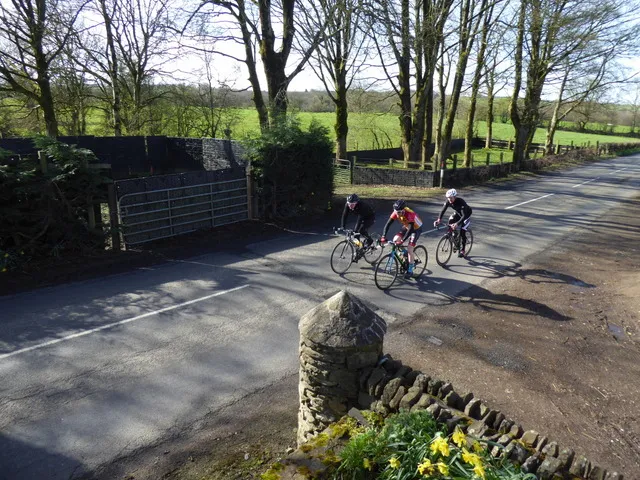
Photo: Kenneth Allen , CC BY-SA 2.0, via Wikimedia Commons
Everyone plans the first half of a bike ride. The café stop, the viewpoint, the climb a mate has been banging on about since March. Then the second half arrives uninvited: a draughty crossroads, a headwind, and a clock that is suddenly moving considerably faster than you are.
Here's the argument. On a beginner buddy ride, the way home decides whether the day was a success. Not the summit photo, not the flapjack. The return leg is the bit people remember when they're wheeling the bike into the hallway and deciding whether to say yes next time.
Which is why the most useful planning habit you can steal is simply this: plan backwards. Start at the finish. Work your way towards the start.
Why the return leg gets ignored
Outbound planning is fun. You pick the good bit — the climb, the reservoir, the seaside town with the chip shop — and the route more or less writes itself. The return gets treated as admin. Whatever gets you back.
But the return is where all the variables pile up. Legs are tired. The group has been riding at the pace of the fastest talker for three hours. Blood sugar is somewhere near the floorboards. And in the UK, the light is doing that thing where it leaves early and without warning.
Plan the outbound and you've planned a day out. Plan the return and you've planned a ride that actually works.
Start at the finish line
Before you open a mapping app, answer three questions honestly.
- Where exactly does the ride end? A specific station, a specific car park, someone's kitchen. 'Back in town' is not a finish line.
- What time does it need to end? Work back from the train you're catching, the daylight you've got, the person who has a babysitter waiting.
- What should the finish feel like? For most beginner groups, it's arriving with something left in the tank. Not crawling. Not sprinting.
Those three answers constrain everything else, and constraints are a gift. A 60-mile loop with a 16:30 train and a November sunset isn't a route — it's a countdown.
Daylight is a route feature, not a footnote
The UK clock change in late October takes a serious bite out of the afternoon. By early November, dusk is arriving around half four in much of England and earlier the further north you go. Treat that as a hard limit, not a nice-to-have.
Take your planned finish time and add a buffer: an hour if you're riding with anyone new, ninety minutes if the group is mixed ability or the route has any realistic chance of a mechanical, a wrong turn, or a long conversation with a farmer about a closed gate.
If the maths doesn't work out, shorten the route. Nobody has ever regretted a ride that finished in daylight. Plenty of people have regretted the other version.
Build bail-outs before you need them
A bail-out is anywhere the ride can end early without drama: a station, a bus route that takes bikes, a shortcut back to the start, a pub with a warm room and a forgiving landlord.
Aim for roughly one every hour on a beginner-friendly route. That sounds like overkill right up until the first time someone's knee starts complaining at mile 18, and suddenly a station two miles away is the best news of the entire week.
Worth marking on the map:
- Stations with a decent service — not one train every three hours on a Sunday, and check the bike spaces before you commit a group of five.
- Towpath shortcuts that cut out a hilly loop and rejoin the route further along.
- A direct road back to the start, even if it's less scenic than the way out.
Plan for the fade
Beginners don't fade in a straight line. There's usually a point — often around two-thirds of the way round — where the ride stops being an outing and starts being a task. Plan the return as if everyone will be 20% slower than on the way out, because they usually are, and group dynamics add their own drag: the regroup stops get longer, the layers come off and go back on, someone needs the loo.
So make the return the easier half. Not necessarily downhill, but simpler — fewer junctions, fewer turns, less stopping to squint at a phone. If you can make the last hour a straight line along a towpath or a quiet lane with one decision in it, do that.
The train station is the great no-drama exit
One of the best things about riding in the UK is that you can often build a route that's a straight line between two stations rather than a loop. That single choice removes the whole question of the return leg, because the finish isn't somewhere you have to ride back from — it's somewhere you walk away from, bike in hand, already discussing the cake.
Check bike reservations, check whether the station has a ticket machine, and know which platforms involve stairs. Small details, but they're the difference between a smooth ending and a group of six people carrying bikes over a footbridge in the dark.
Weather on the way home is a different sport
Morning weather is optimistic weather. Afternoon weather is where Britain reminds you what it's about: headwinds that weren't there at nine o'clock, showers timed to arrive exactly as the group strings out along an exposed B road.
Design the return so the sheltered bits come last. Hedged lanes, a cycle path through town, a towpath. And pack a layer you didn't wear on the way out — everyone is warmer at the start than they will be at four in the afternoon.
Read the route backwards before you send it
The last fifteen minutes set the memory of the whole day. If you can end with a gentle roll-in, a tea stop ten minutes from the finish, or a station with a bench, you've bought yourself a group that will come back next month.
So before the route goes into the group chat, read it from the finish to the start. If the last third looks like hard work, change it. The outbound will still be lovely. It always is.